Permaculture in Timor-Leste
Long-term nature-based solutions
Permaculture is a design system that aims to create sustainable and self-sufficient human settlements and agricultural systems by mimicking natural ecosystems. It emphasizes working with nature rather than against it, focusing on ethical principles like care for the Earth, care for people, and setting limits to consumption. Permaculture designs integrate various elements, fostering beneficial relationships between them to achieve high yields with low inputs, while building soil fertility and conserving resources.
In Timor-Leste, the seeds of permaculture was first introduced to the country by Ego Lemos when he foundered Permatil (permanent agriculture Timor Leste). Today, permaculture is an important part of Timorese water and land management, creating sustainale food systems and and a greater undersrtanding of working with nature, rather than against it.
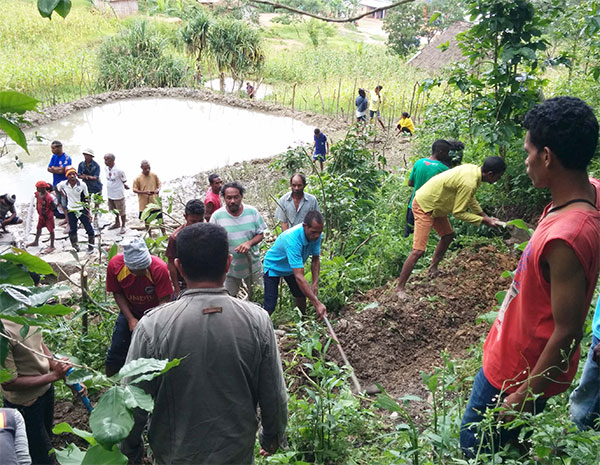
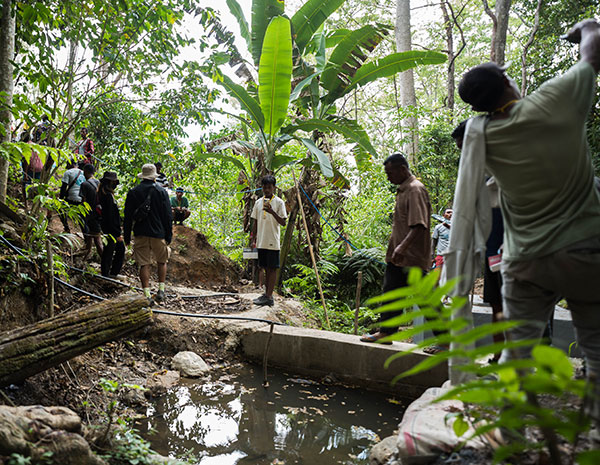
Permaculture’s positive impact
1. Household and community impacts
- Improved access to water, both in volume and year-round supply
- Improved and more varied food production and food resilience/sovereignty
- Improved technical knowledge and ability through community-driven water catchment development
- Environmental literacy and resilience through improved water supply, production, diversification
- Reduced work burden, particularly on women and children carrying water over distance
- Increasing household resilience and ability to mitigate, adapt and cope with climate change
- Increased capacity to build/repair using natural construction and building techniques.
2. Health impacts
- Cleaner and more reliable drinking and household water for cooking, washing and sanitation
- Health and nutrition improvements, growing more nutritious food and improved production
- Less waste and less problems from waste such as contaminated water supply, stagnant water, rubbish problems and poor animal manure management.
3. Economic impacts
The economic impacts from access to reliable water-sources:
- Improved water supply leading to livelihood opportunities
- Improved and more varied food production for stable income and surplus for local markets
- Improved technical knowledge and ability
- Greater opportunities for local enterprises and value adding
- Increased money circulation in local economies
- Reduced need to spend money on imported goods
4. Environmental impacts
- Practical and theoretical understanding of sustainable community and connection with the environment
- Cleaner, protected springs and healthier and cleaner river systems and water sources
- Increase in ecosystem restoration that is part of every water catchment project
- Reduced burning and erosion problems, improved soil and land management
- Landslides and flooding potential is reduced and/or prevented
- Increased rainfall following from ecosystem restoration practices
- Reforestation and sustainable agro-forestry skills from nursery to harvest
- Improved holistic land management techniques with integrated animal grazing strategies